Substance Safety (Ch)art
Substance Safety (Ch)art
Introduction
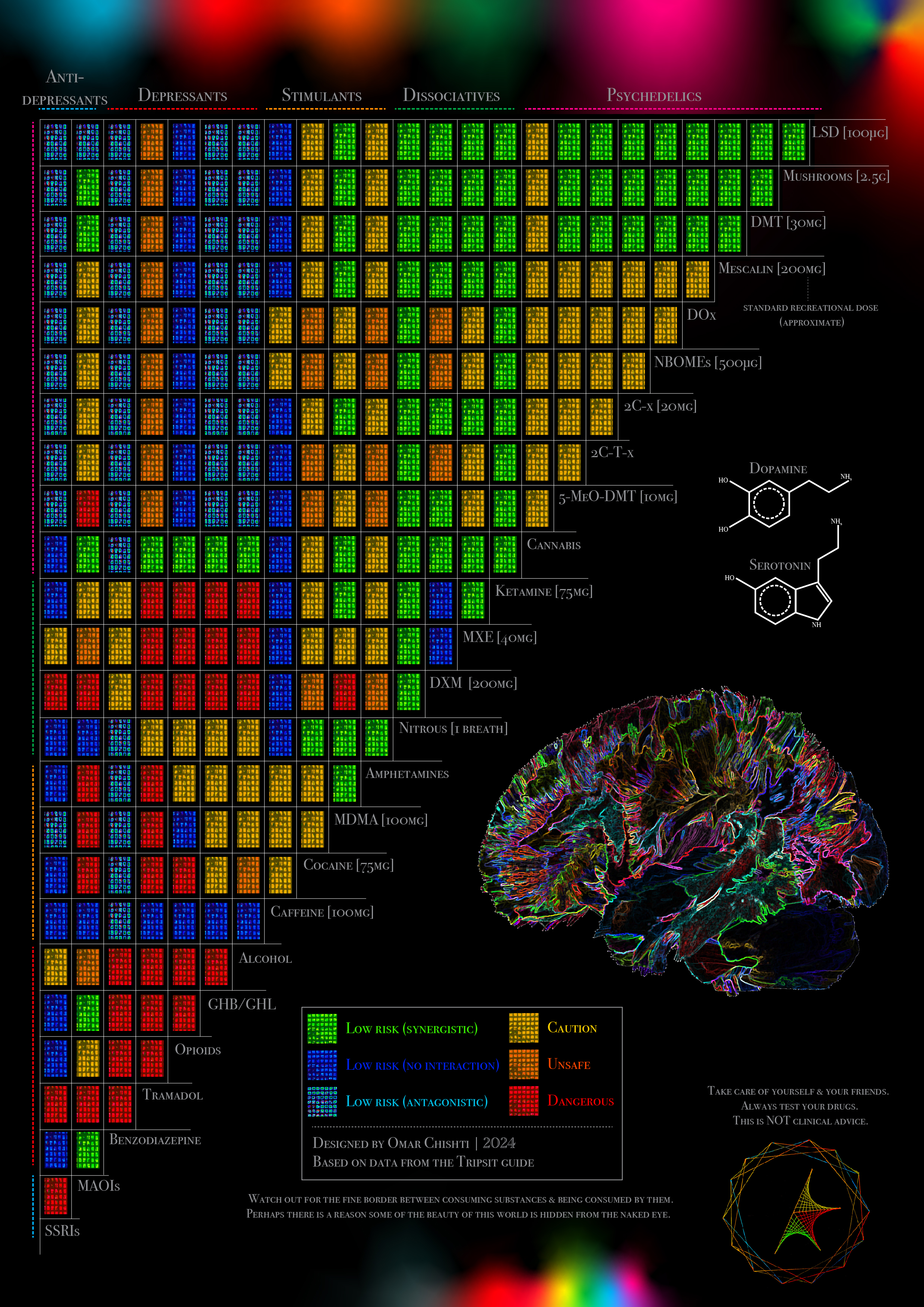
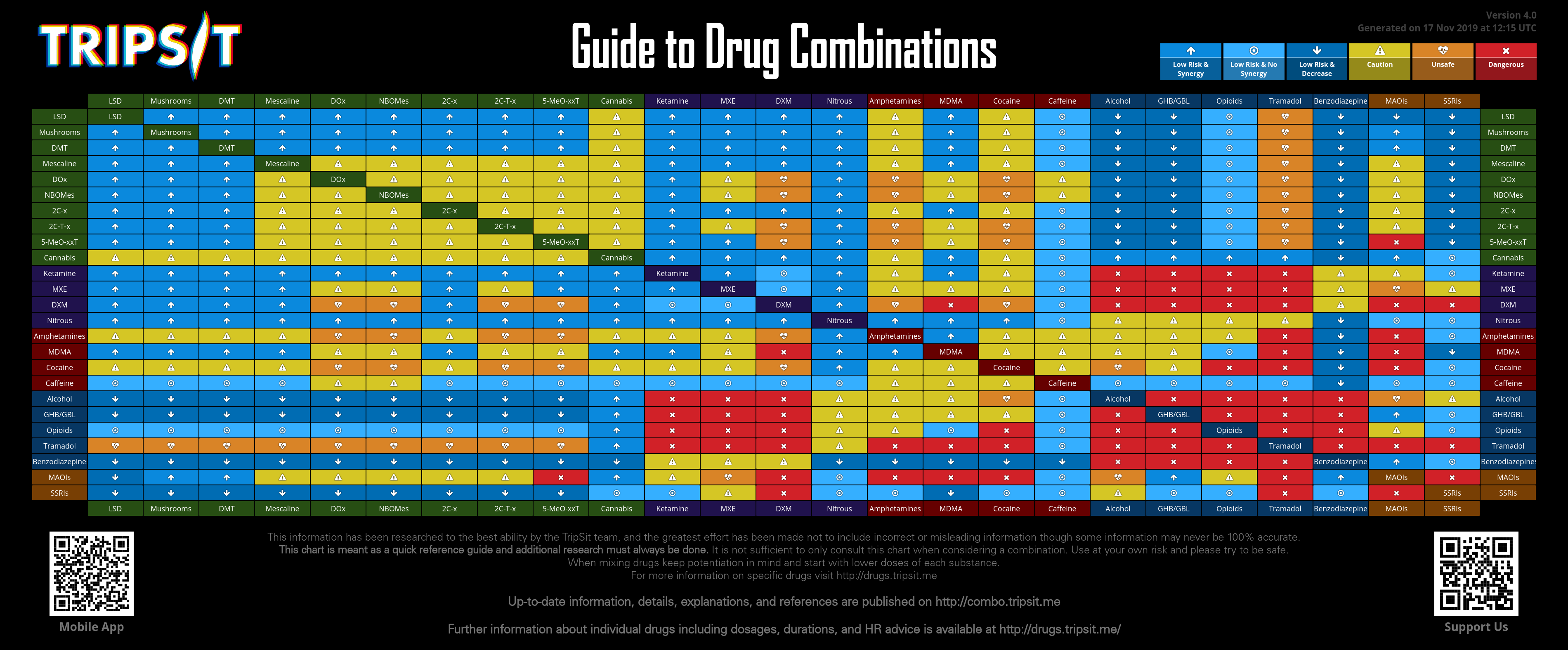
This piece depicts the relative safety/danger for binary combinations of a list of commonly used recreational substances. It also provides some approximate dosage numbers. The information is based on the TripSit guide, which is curated by a team of volunteers and based on careful reviews of peer-reviewed research.1 I designed this version since I felt the existing chart was informative but visually inert, limiting real-world dissemination for harm prevention.
Visual Motif & Design
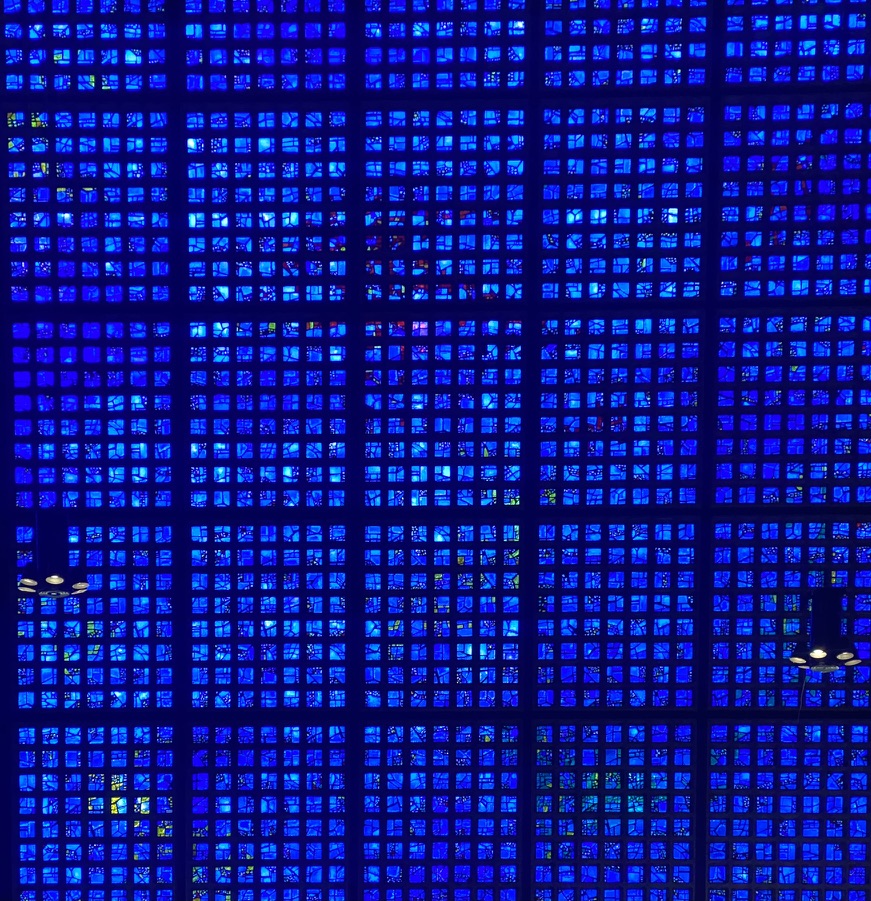
The visual motif is based on the stained glass windows next to Panorama Bar in Berlin (where the habits of fellow patrons helped me realise the utility of such a chart). Since photography is prohibited inside, the image of the windows used to construct the chart was taken in 2024 at the Kaiser Wilhelm Memorial Church complex.
Data Encoding
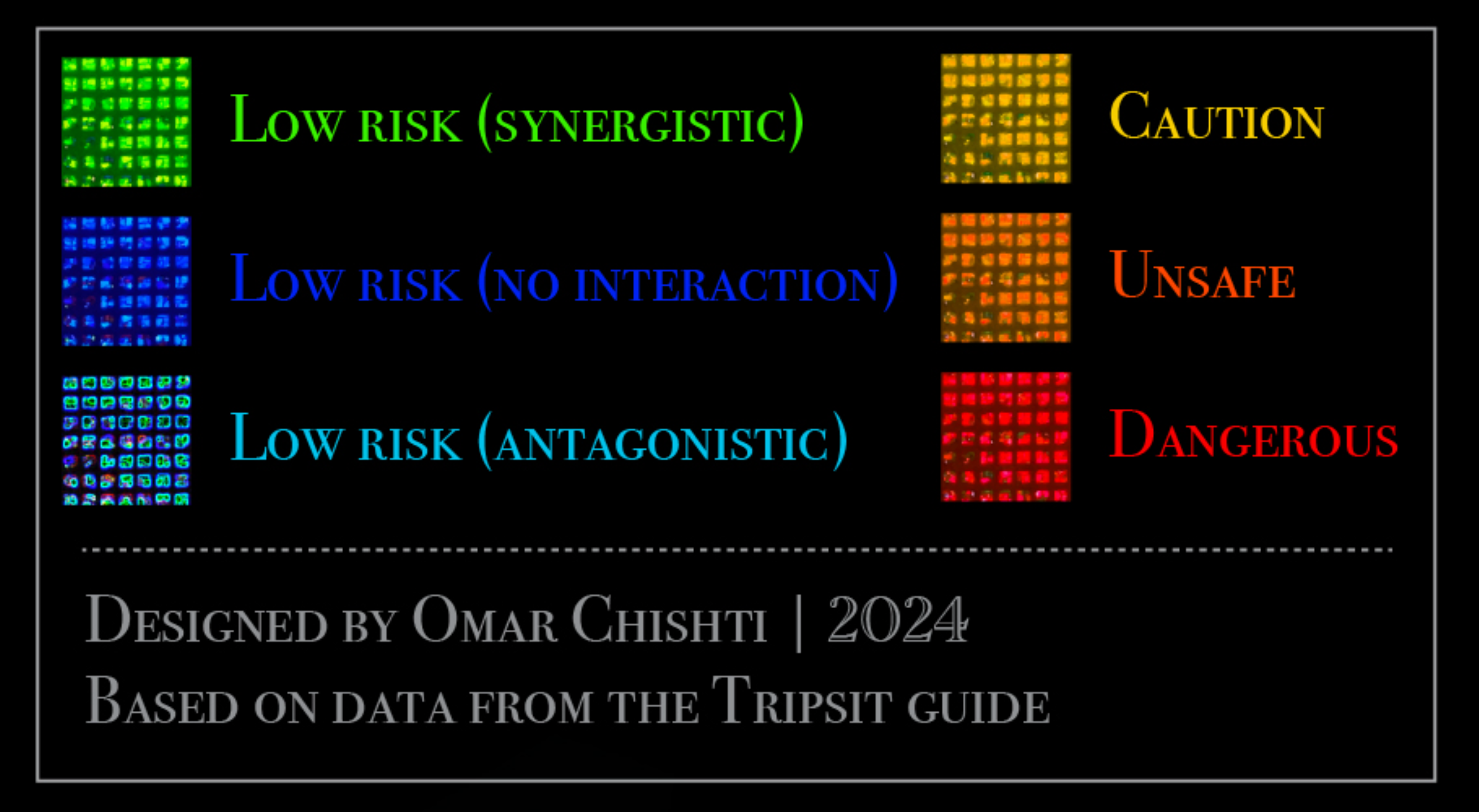
25 substances are included, broadly categorised as: psychedelics, dissociatives, stimulants, depressants, and anti-depressants. This results in 300 possible interaction pairs, which have been classified into six different types.2 The three low-risk interaction types are synergistic [green], no interaction [deep blue], and antagonistic [azure]. The other three interaction types are caution [yellow], unsafe [orange], and dangerous [red]. Note that every entry retains non-zero risk; green denotes lower risk, never safety. Synergistic interactions refer to the combined effect being greater than the sum of the parts, while antagonistic interactions cancel each other out.
Aside from the stained glass window motif, which is meant to make one think of looking out into another world, I also tried to capture the retro aesthetic of an old Mario level. The thin bordering lines, 'a network of lines that interlace', should exhibit a subtle grid illusion where dots appear at the intersection points. I also applied psychedelic gradient fills to the background.
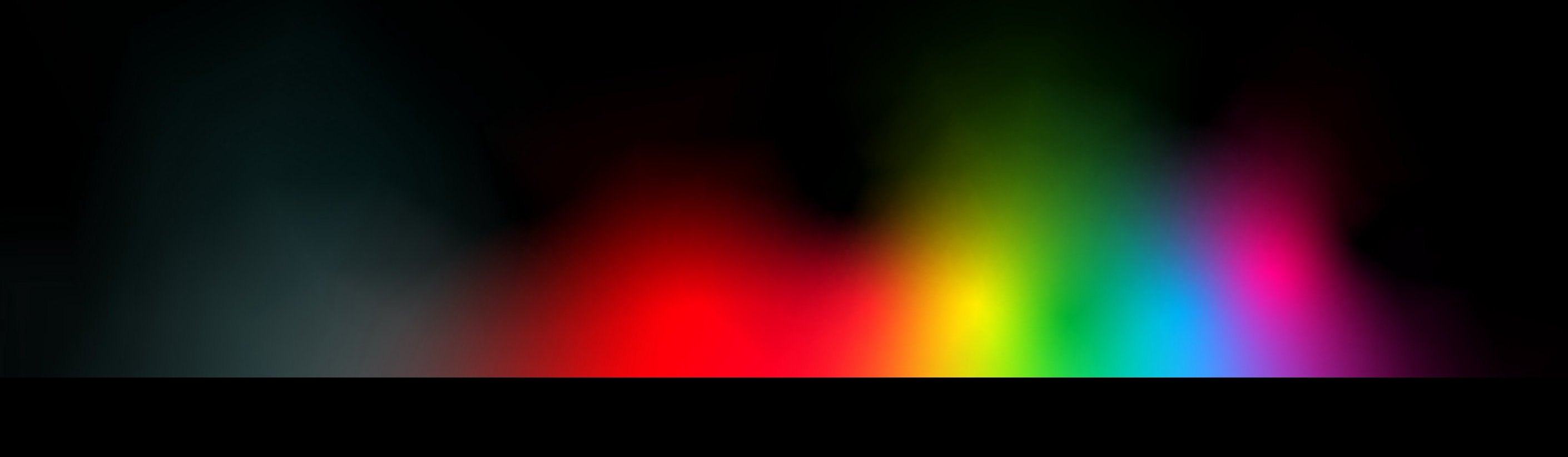
This piece was completed in June 2024. There are actually lots of little touches in this one that only become fully apparent for those with a particular kind of perspective. These are meant to cater to the altered perceptual sensitivities of people in altered states of consciousness.
The Brain Tractogram
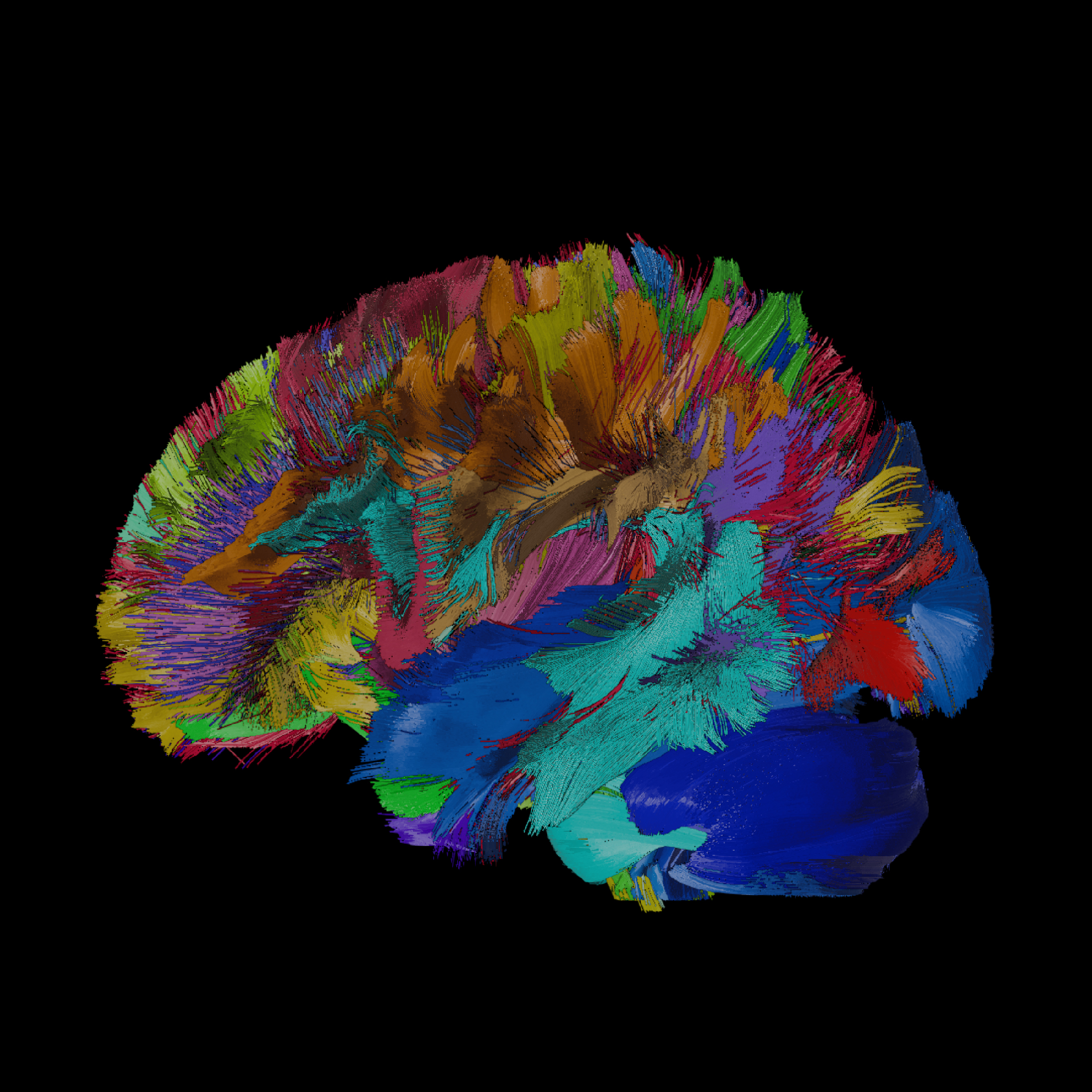
The tractogram depicted next to the chart is a render I created using Blender. Diffusion MRI data from 1065 healthy young adult subjects from the Human Connectome Project was processed to generate the tractogram as part of my research on the brain's networks. Different white matter tracts are in different colours in the output render, which I processed with a glowing edges effect to create the final depiction. If you are interested in learning more about white matter tracts, the informational highways of the brain, I recommend this 3D interactive web tool I built a few years ago.
I recognise that many people find it rather difficult to interpret this chart, since it is conventional to label both rows and columns in such constructions. The trick of diagonal labelling coupled with collapsing the matrix (since the data does not differentiate between combination A-B and combination B-A) allowed me to remove the redundant repetition. Although aesthetics were a primary concern, I trust that for some people this chart actually increases the legibility.
There are interesting patterns in the matrix that come out with the ultra saturated colouring. The two major red domains, for example, correspond to combining depressants with depressants (never mix downers!) and depressants with dissociatives.3 The two main green domains are psychedelics in combination with themselves, or with dissociatives. The matrix is unromantic: alcohol contributes poorly to most combinations.
Reception & Impact
Although the piece on the solar system has been the most successful on social media, the first version of this substance safety chart has enjoyed a degree of virality on some anonymous forums. I've even met a couple of different strangers out at parties who actually use it! This piece recently led to the first piece of fan-mail I've received, when an artist reached out asking if they could adapt it for one of their projects. They work by projecting subversive science, using women's bodies as canvases for their photography/installations. Always reassuring to know that I don't just create within a void.
I must emphasise that I am not a doctor, that this is not clinical advice, and that I only designed this to be disseminated as a harm-reduction tool. I'll end with the sentences I wrote for this piece that a friend visiting me in Paris this past weekend told me he really loved:
'Watch out for the fine border between consuming substances & being consumed by them.
Perhaps there is a reason some of the beauty of this world is hidden from the naked eye.'